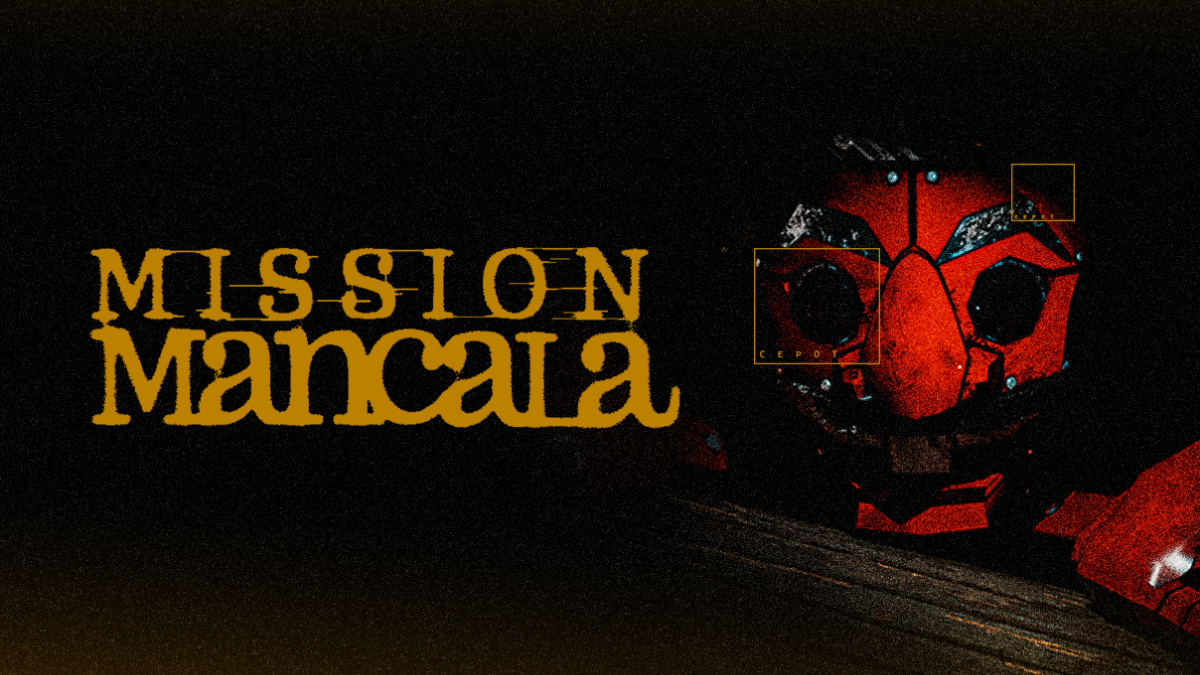
After a chance meeting on Threads (follow me!), I found myself in conversation with a gentleman called Hasbi. As a final-year Multimedia student and Chief Operating Officer (COO) at Hoop Studio, Hasbi’s career is off to a flying start. Together with his team in Indonesia, he is currently developing his second game, Mission Mancala.
A culturally rich foundation
For those not in the know, Mancala is one of the oldest board games ever created. “What fascinates me most is how many different versions exist around the world”, Hasbi explains. “Almost every region has its own rules and variations. This makes it a surprisingly rich and culturally significant game.”
A fair and concise explanation. As touched upon above, Mancala has a rich and expansive history. It is a board game that has plenty to pull from – even more so when being developed in the fertile Indie Game community.

“I’ve always loved playing games, especially indie games. It constantly amazes me how small teams can create such incredible experiences”, Hasbi continues. “One game in particular that really inspired me was Hollow Knight. It’s hard to believe something so polished and memorable was made by such a small team.”
I wanted to dive deeper into the game development thoughts and processes at Hoop Studio. The inspirations. The hardships. A few choice questions followed.
What was the most challenging thing about creating Mission Mancala?
H: “Mission Mancala is our second game as a team, and by far our most ambitious project. Before this, I had never worked on a game of this scale. The biggest challenge has been the long development cycle we’ve spent nearly a year working through. Along the way we’ve experienced burnout, disagreements, and plenty of difficult moments. Somehow we’ve always found a reason to keep going. Another major challenge has been marketing. Our team consists mostly of technical people. None of us had much experience promoting a game, so we’ve had to learn everything from scratch.”
What software have you used to make your game?
H: “We use a variety of software during development. Our main tools are Unity, Blender, Adobe Photoshop, and FL Studio. The main reason is simple: these are the tools we were trained to use in college, so they became the foundation of our workflow.”

Do you have a favourite indie game?
H: “I play a lot of indie games. Some of my favorites are Hollow Knight, Expedition 33, and Inscryption. Each of them has influenced the way I think about game design in different ways.”
Without spoiling anything, what’s your plan for the rest of 2026?
H: “Our current goal is to fully release Mission Mancala in 2026. We’re working hard to make it the best game we can and hopefully introduce more players to a fresh take on the classic Mancala formula.”
“What fascinates me most is how many different versions exist around the world. Almost every region has its own rules and variations.”
As we initially started talking, I was offered the chance to try out Mission Mancala. As intriguing as the premise is, the game has one fatal flaw for me. It is a rogue-like. Whilst there is nothing inherently wrong with that, I personally despise that particular genre of game. I politely declined the offer. This was not meant as a sign of disrespect, of course. I’d rather be honest than waste Hasbi’s time sending me a game I wouldn’t enjoy playing. For what it’s worth, I do think the visuals look absolutely fantastic.

Of course, that type of gameplay may be exactly what you enjoy. If that IS the case, you can checkout and wishlist the game via the official Steam page. Heck, there’s even a demo to try out too!
Thanks to the potential release of Mission Mancala in the second half of 2026, Hasbi and his team at Hoop Studio have their work cut out. And once it has been released, it should be a win for Mancala players everywhere.